Monday
Monday: Notice
A neighbor rushes into the Fix-It Bay. "My tablet is broken! Fix it!" Rocket grabs it and starts tapping everywhere at once. Nothing changes.
Raven holds up a hand. "Wait. What do you notice? Not what you think is wrong. What do you actually see and hear?"
Rocket stops. The screen is on. An app is open. The sound is off. Nova glows. "Would you like a hint? Noticing comes before fixing. Always."
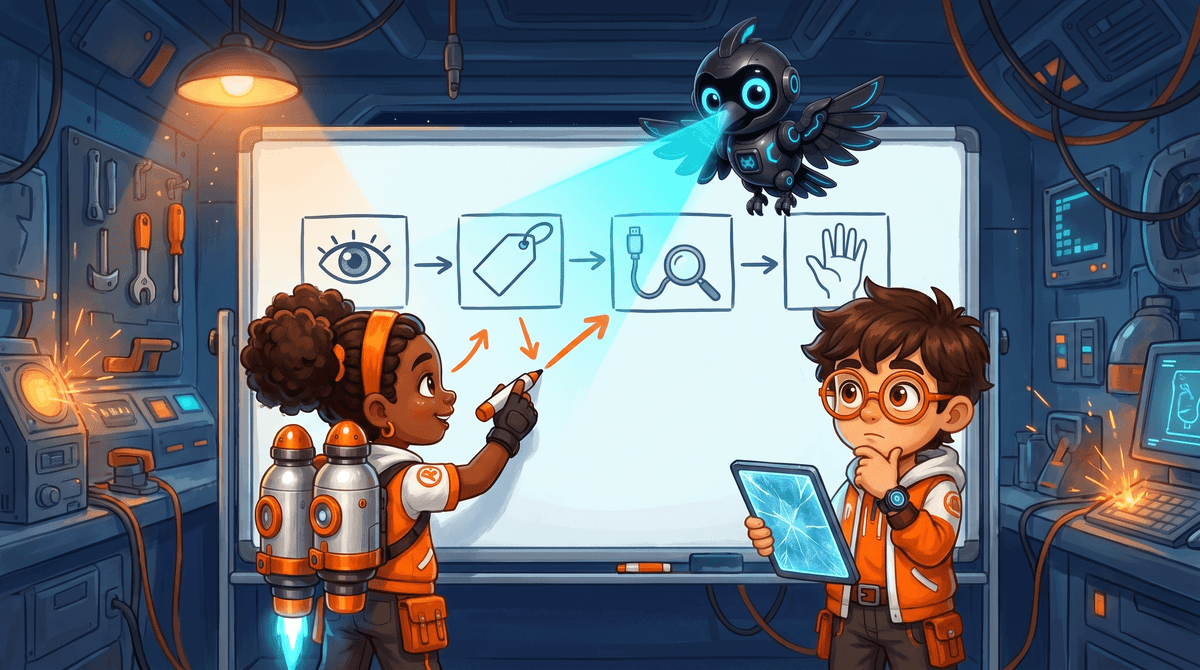
Slow down and look
The first step of fixing anything is to notice. Noticing means looking and listening carefully before you touch anything.
Rocket wanted to fix the tablet right away. But he did not know what was wrong yet. Tapping everywhere is guessing, not fixing.
A good technician asks four noticing questions first.
- What exactly do I see? Is the screen dark, frozen or showing a message?
- What exactly do I hear? Is there a fan, a beep, or nothing at all?
- When did it start? Was it working a minute ago?
- What changed just before? A new app, a drop, a low battery?
These questions turn a big scary problem into small clear facts. Facts are things you can work with.
- Read the question.
- Tap your answer.
| A guess | A thing you noticed |
|---|---|
| The tablet is broken. | The screen is on, but it does not change when I tap. |
| The Wi-Fi is dead. | The Wi-Fi picture shows one bar instead of four. |
| The speaker is ruined. | The volume shows zero and the mute sign is on. |
- Read the question.
- Tap your answer.
Clues hide in small things
Small details are big clues. A tiny mute sign explains no sound. One Wi-Fi bar explains a frozen video.
A device often tells you what is wrong, if you look. Messages on the screen, little pictures and lights are all clues.
Noticing takes about one minute. It can save an hour of guessing.
| Statement | True or false? |
|---|---|
| Noticing comes before fixing. | ? |
| Tapping everywhere quickly is a good first step. | ? |
| A tiny mute sign can explain no sound. | ? |
| The question What changed? is not useful. | ? |
Say three things you notice: a picture, a message, a number.
Do not fix anything yet. Just notice.
Great start, Crew Technician! You slowed down and noticed. Tomorrow you will turn what you noticed into one clear sentence.