Monday
Monday: Two Envelopes and Some Beans
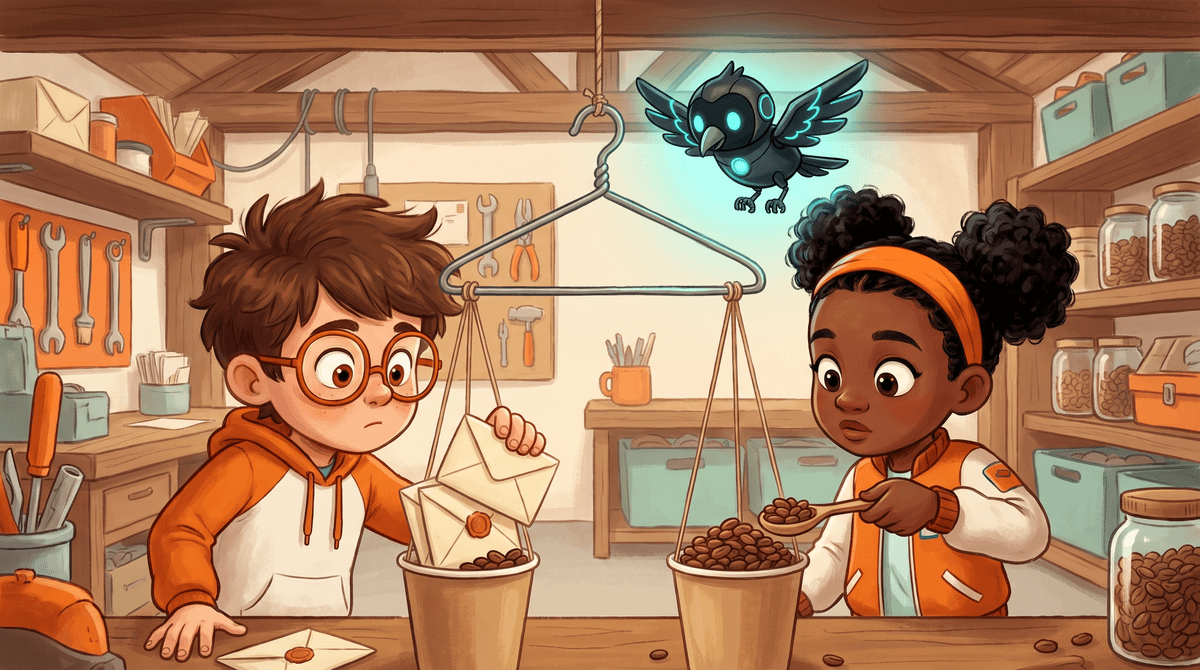
Rocket sets two sealed envelopes in the left cup and adds 3 loose beans. "Both envelopes hide the same number."
Raven spoons beans into the right cup, one at a time, until the hanger settles. "Eleven," she counts.
"So 2x + 3 = 11," Rocket says. "Two things happened to x. It got doubled, then 3 got added."
"What do you notice about the order?" Raven asks. "Which one should we undo first?"
Rocket reaches for the envelopes, then stops. "The 3 was added last. So... take the 3 off first?"
Nova hovers above the hook, her light steady. "Reverse order," she says. "Last on, first off."
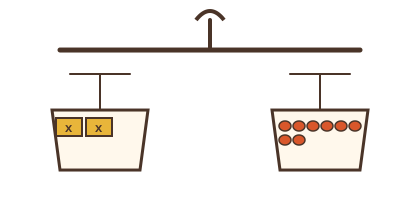
Raven lifts 3 beans from each cup. Two envelopes face 8 beans. Rocket grins. "Now share." Nova hums. "Then check."
Two steps were done, so two steps undo
In 2x + 3 = 11, two things were done to x. First it was multiplied by 2. Then 3 was added.
To get x alone, undo them in reverse order. The 3 was added last, so subtract 3 first. Then divide by 2.
Do each undo to both sides. The balance stays level the whole way.
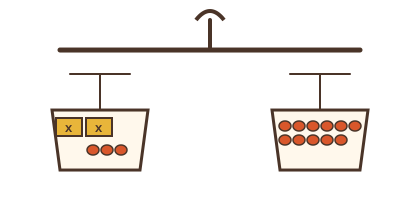
- Write the equation: 2x + 3 = 11.
- Subtract 3 from both sides: 2x = 8.
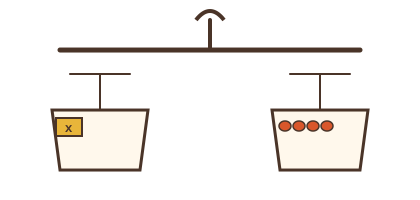
- Divide both sides by 2: x = 4.
- Check: 2 × 4 + 3 = 11. True.
Undoing in the wrong order makes a mess. Dividing 2x + 3 = 11 by 2 first gives x + 1.5 = 5.5, which still works but is harder.
The numbers can be decimals or fractions. 0.5x + 3 = 7 undoes the same way: subtract 3, then divide by 0.5.
- Read the question.
- Tap your answer.
- Read the question.
- Tap your answer.
| Statement | True or false? |
|---|---|
| x = 4 is a solution of 2x + 3 = 11. | ? |
| x = 7 is a solution of 2x + 3 = 11. | ? |
| In 2x + 3 = 11, the 3 was added last, so it is undone first. | ? |
| x = 5 is a solution of 3x - 1 = 14. | ? |
Write the equation. Undo the 2 first, then the 3. Check by substitution.
Two steps, undone in order. Tomorrow a group of beans and envelopes is multiplied all at once: p(x + q) = r.