Monday
Monday: Seasons Change a Habitat
Rocket pulls on a jacket and stops at the workshop door. "It was warm here last month," he says.
Raven points at the big tree in the yard. Half of its leaves are on the ground.
"The yard is changing," she says. "I want to know what the animals do about it."
Nova hums beside them. "Good question," she says. "Check your notebook from the start of the course. What is different?"
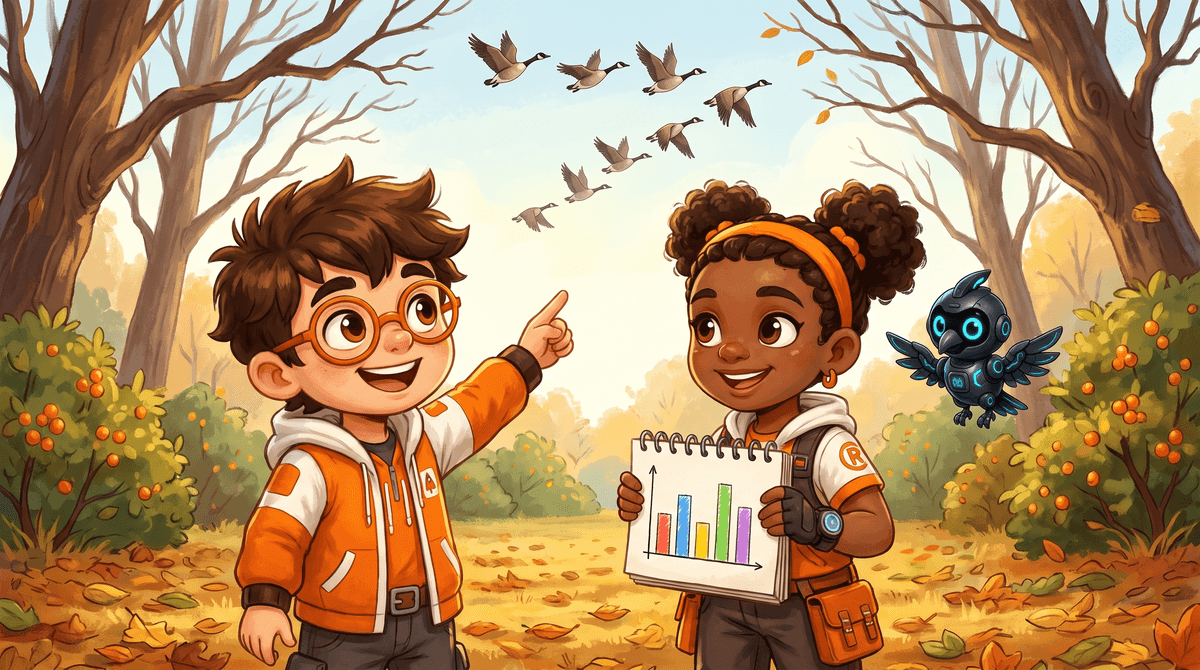
What a season changes
A season is a part of the year with its own weather and daylight.
Spring, summer, fall and winter make one full year.
Seasons change three big things in a habitat. Think of them as light, warmth and food.
In summer, days are long and the air is warm. Plants grow, flowers open and insects are busy.
In fall, days get shorter and the air cools. Many trees drop their leaves.
In winter, days are short and the air can be cold. Fewer plants grow and fewer insects move about.
In spring, days grow longer and warmer again. Seeds sprout and new leaves open.
| Season | Daylight | Air | Food for animals |
|---|---|---|---|
| spring | getting longer | warming up | new leaves, flowers and insects return |
| summer | longest | warm | plenty of plants, seeds and insects |
| fall | getting shorter | cooling down | seeds and fruit, fewer insects |
| winter | shortest | coldest | the least food of the year |
- Read the question.
- Tap your answer.
Why food follows the seasons
Plants need light to grow. Long summer days give plants a lot of light.
Many insects eat plants, so insects are busiest when plants are growing.
Many birds eat insects, seeds or fruit. So bird food is easiest to find in spring and summer.
When fall comes, the chain slows down. Less light means less plant growth.
Less plant growth means fewer insects, and fewer insects means less food for many animals.
That is why living things in your yard have to change with the seasons.
| Statement | True or false? |
|---|---|
| Winter days are shorter than summer days. | ? |
| Insects are busiest in the coldest months. | ? |
| Many trees drop their leaves in fall. | ? |
| A season changes the light, the warmth and the food in a habitat. | ? |
List three signs of the season you see. Try leaf color, flowers, bare branches, insects or birds.
Keep this page. You will compare it with a page from another season.
Great season spotting! Tomorrow we find out how animals answer one big question. What do I do when winter comes?